art in all its forms

art in all its forms

2/26/12

Favourite films of 2011

Tom Hiddleston in Joanna Hogg's sublime film Archipelago

The best film of the year is not always the same as one's favourite film of the year. The former is destined to remain a classic, watched and studied (perhaps in film school) for decades to come. The latter is the film you are most likely to pop into the DVD player when you get home on a rainy Saturday night. In the spirit of today's Oscars, here's a look at some of our favourite films from the past year.

Archipelago. Posh family tensions crack open over a getaway to the Isles of Scilly. Sounds unappealing as the subject matter for a film? Hold your horses. This film from English director Joanna Hogg was an utter surprise. Very few films are all about pleasure and the senses. This film ravishes, it is washed with such pale and cold browns and greens, it is wind and rain-swept. Every single shot is composed with a kind of sly joy: the film is like one long, extended still-life rupturing ever so slightly via changes in the environment and its characters. Not since The Mysterious Case of Angelica have I enjoyed a film so much. This is the work of an important artist.

A Separation. If you like cinema that wraps a tight, suffocating coil around you and never lets go, this is a film for you. I mean that in a good way! A Separation is a searing drama about a family in crisis set in Iran, a country whose films are not often seen outside of it. The crisis at the heart of the film is so well-developed and minutely observed that I had to watch every shot with admiration and a desire to know what happens next. The movie is as much about Iran's moral/legal system as it is about the family which falls apart at its core. Like The Tree of Life, this is a film I have been unable to forget.

Peyman Maadi and Sareh Bayat in A Separation

Contagion. Talk about an under-rated film. Yes, we have seen virus disaster movies before. Yes, we've done the whole ensemble cast, how-are-they-connected-in-the-end? game. But I will say this: there was — with perhaps only one exception — not a more stylish or better edited film in 2011. It is a compelling and plausible rendition of the outbreak of a mysterious and deadly virus which affects a wide cast of characters as the world comes to terms with it in a frenzy of panic and bureaucracy. The film has slipped below most awards radars because of the timing of its release and possibly its seemingly brain-free box-office content. It's a shame, because Kate Winslet gives what is perhaps the best performance of her career, and Gywneth Palthrow is creepily good as an oblivious party-wife whose personal choices are at the heart of global events.

Drive. If Bronson was a "film" then this is Nicholas Winding Refn's epic tale. There is very little dialogue in Drive and the miracle is in Ryan Gosling, a protean actor who quite surprisingly managed to fit in this gruesome tale of crime and romance. What is most interesting about Drive, though, is its blurring of genres. We're still not sure what it's supposed to be. But whatever it is we were more than happy to go along for the ride. Albert Brooks delivers one of the great performances and is — perhaps predictably — overlooked for an Oscar.

Jane Eyre. Ah Mr Fassbender as Rochester. The film was not rocket science. It was based on an old classic. But how well it worked, how dangerous it appeared, how beautifully scored. Mia Wisikowsa is by far the best Jane on celluloid. Her performance has been ignored by all the awards bodies. Jaime Bell is also exceptional as St John Rivers.


Ryan Gosling in Drive
The Girl With the Dragon Tattoo. Let's not get into a debate about whether the original Swedish version was better or whether the David Fincher version does "justice" to the book. At the end of the day, the film is good, not airtight, but good. It is certainly the rival to Contagion for its stylish look and its editing. There are some lingering doubts over a few of the violent and seemingly gratuitous rape scenes. And it does seem a bit long. Notwithstanding, it worked well.

The Skin I Live In. There are many contenders for "creepiest film of the year" but I think this one takes the prize by a big margin. It's creepy, but not in an expected or garish way: only a few scenes are blood-soaked.  What is unnerving about it is how much of director Pedro Almodovar is in it: his almost perverse willingness to twist a plot into all sorts of odd shapes and to take audiences to complex places. The film has an unforgettable sequence involving a series of events in a lush garden in the backdrop to a party. The sequences is deliberately corny and cheeky and is most certainly comic, but such darkness fills the canvas! The lead actress, Elena Anaya, is extremely good in a very unusual role.

Brad Pitt in The Tree of Life

The Tree of Life. Far from being didactic, The Tree of Life knows nothing and yet it knows, at its heart, that it knows nothing, despite its seeming Christian underpinnings. This is the source of its baffling power. The film is more of a cinematic exercise than a film. Contrary to what many have said, there is a plot, and you can follow it in between all the pretty shots of Brad Pitt's face/babies feet. I saw this on BluRay and can only hope most people get a chance to see it on that format as well. This is one of those films that everybody has to see at least once in their lives. It's a breath-taking cinematic experience that was so intriguing I was hooked from first to last.

Must mention: Tinker Tailor Soldier Spy (Gary Oldman), Wuthering Heights (powerful), My Week With Marilyn (Michelle Williams), The Iron Lady (Meryl Streep), War Horse (don't scorn, it was beautiful!), Midnight in Paris (classic late Woody Allen: a comic gaffe with a powerful and profound sting in its tail); The Ides of March (not bad), Shame (Fassbender), We Need to Talk About Kevin (Tilda Swinton).

12/25/11

Under leaves so green

Jasmine Thomas-Girvan's Gardening in the Tropics
Sculpture

Photo by Michelle Jorsling, courtesy y art gallery.

How to describe it? The extraordinary work of Jasmine Thomas-Girvan, who twists pieces of palm fronds into tongues of flame, who places a cage within a cage within a cage, whose human figures twist into tortured, glorious creatures: bodies illuminated by the mahogany that encases them?

I am referring, of course, to Thomas-Girvan's most recent show held at the Y Art and Framing Gallery at Taylor Street, Port of Spain. The show took its title from Olive Senior's now classic collection of poetry and fused poetry with sculpture to create meditations that, for me, were profound and deeply affecting. This was work commenting on society: Caribbean and beyond (Thomas-Girvan was born in Jamaica but lives in Trinidad).

Consider 'Seeing Red', a lacquered box painted post-box red (of is it blood red?) with a figure sitting with legs split atop it, fingers to its ears. Not hearing, but red all around. The piece is about not being open to what is around us. Unlike the figures in 'The Message' who, in the course of one conversation are confronted, literally, by an iron fist with a message of its own. The intrusion of violence. A violent intrusion. A moment of power. A power reversal.

The stand-out, however, for me was 'The Illuminated Heart', a hybrid between a sculpture and a pendant: an illustration of how art can literally be wearable. A bronze pendant (a heart with a head atop it in ecstasy/pain/worship/song) is detached from a mahogany body. The idea of detachment revealing something more vulnerable beneath. The feeling of isolation. The suggestion of a fetal kind of vulnerability. The simultaneous suggestion of strength; of a solid core. All from this piece, which you can see in the catalogue for the show.

The Tower of Victory - mahogany and bronze, height 15". Photo courtesy Y Art Gallery.

Other highlights included 'Flame', a simple sculptural construction made of palm frond material and brass and inspired by Orwell's line: "and I was alive it's a feeling inside you a kind of peaceful feeling and yet it's like a flame." Another was 'Finding your Soul', which offers a glimpse of freedom by placing its subjects behind bars. There is politics in all of this: both in a limited and wider sense of negotiating a place amid oppressive forces. But the key note is a sense of hope, and, in my estimation, love.

SEE the catalogue here. READ more here.

12/5/11

FILM REVIEW: The Skin I Live In (La Piel Que Habito)

Antonio Banderas in The Skin I Live In

This is the creepiest Almodovar film yet, and that's saying something for the great Spanish director.

La Piel Que Habito is an uneasy blend of suspense/thriller and melodrama. To describe the plot is to rob the film of part of its considerable power. That said, the movie follows a crazed plastic surgeon (Antonio Banderas in the performance of his career) and his experiments on a woman he keeps captive at his home. From the start, an overwhelming sense of mystery intrigues each scene. Slowly, bit by bit, Almodovar lays down plot pieces of a complex puzzle which coils into a frenzy of sex, violence, gore and murder.

The film falters and lags, however, in its middle section, especially after Almodovar deploys the device of the expository conversation to reveal crucial plot points. Also, the film sometimes lacks the flair we expect from Almodovar. It's as though the weirdness overwhelms key plot sequences which, in an Almodovar film, normally flow with a kind of effortless ease.

However, all of the tension is in the service of a powerful ending that is astonishing in its contradiction: simple yet complex. Complex because of its questions about identity. This is an audacious film that builds itself on a central premise revolving around the nature of the body and what it really means to inhabit it. Queasy, astonishing and philosophical. One of the year's best films.

STARS: ****/ four

Studio Swap // Che Lovelace


FROM THE ORGANISERS:

Opening Reception
Thursday 08 December 2011
6.30 - 9.00pm
at 37 Fitt Street, Woodbrook, Port of Spain
RSVP 740 7597 / medullaartgallery@gmail.com
Exhibition continues until 22 December 2011


ABOUT THE SHOW


Conceived as an open studio event that takes place outside of Lovelace’s studio, Studio Swap will showcase many new, large-scale paintings, smaller works, and a projected piece. Lovelace’s new, large-scale paintings demonstrate the artist’s increased focus on the human body in various environments and situations. He has been using performance as part of his work process, executing and photographing specific actions, out of which he then develops his paintings. Short stop-motion films are also produced from these performances.

Parallel to his work with the body and movement, Lovelace has continued his long-standing series of Carnival and 'Mas' oriented paintings. A selection of the most recent of these works will also be presented. The artist has also been a fervent documenter of his works in progress as well as day-to-day life and moods in the studio, and a selection of these and other images will form part of the projected piece.

READ MORE at Medula Art Gallery website here. WATCH a video of painter Che Lovelace talking about his process below:


11/12/11

Town to town


Barbadian artist Sheena Rose has a cool tumblr called Strictly Art, which you should check out here.

WATCH a cool Artzpub video featuring her here:


11/5/11

Who are the mikemen?

Photo by Alex Smailes

Here's sneak peak at Miquel (Hit Me With Music, Why Do Jamaicans Run So Fast?) Galofre's latest film, The Mikemen.

FIND OUT MORE here.

Misuse of magic


FROM THE ORGANISERS:


Nov 17, 7pm
Drink! wine bar, Roberts Street


Roger Robinson will be performing a selection of old and new work, and will be supported on the night by poet Keegan Maharaj and DJ Tillah Willah SoundBoy Killah.


SEE VIDEO:

10/15/11

BEDSIDE BOOKS: Poetry!

In honor of World Poetry Day we thought we'd share some of the books near the top of the pile of all the books we are currently reading.


THE POLITICS by Benjamin Paloff, Carnegie Mellon University Press, 2011.

"Deep within the folds of / my being I am carrying an urgent message. / I'd pay attention if I were you," the voice of 'Diptych of the Annunciation, Left Panel' implores. "People I do not know put words / in my mouth,  take my picture. And still I am not / untouched by beauty." The warning is a reflection of a way to read these poems, which pulse with a willingness to embrace ideas and philosophy in tight, clear lines that build arguments but also aim to create something as equally ephemeral: beauty. The juxtaposition of history and contemporary elements is effective. As the California Journal of Poetics remarks: "Paloff has a gift for combining the historical with the contemporary." The effect is like a lush Sofia Coppola film: filled with pop, pathos and a bold stillness. This work is about pushing ideas to their limit, and finding out, perhaps, our own limits and our own simplicities. 

WATCH Benjamin Paloff read poems from this book here.


LAGAHOO POEMS by James Christopher Aboud, Peepal Tree Press, 2011.

With a clear understanding of the way folklore creates tantalising possibilities for poetry, Aboud finds an energetic space between occasional poems and self-reflexitive lore. These startling poems send out red herring after red herring, the Lagahoo himself is both a symbol and a deception: a vessel bearing a passionate feeling for the world, while simultaneously understanding the dangers of drawing close to mortality. It is a macguffin in a sense, for the point is not who he is or what he makes, but what happens when readers try to find him. First published in 2004, the book was heralded by the Caribbean Review of Books which declared: "A remarkable poet has kept us waiting too long – has made us practise, you might say, the patience of the Lagahoo."


DARK AND UNACCUSTOMED WORDS by Vahni Capildeo, Egg Box Publishing, 2011.

"The poetry of Vahni Capildeo not only breaks down conventional notions of seeing the world, but re-affirms ideas of the value and worth of individual experiences. This work attacks and affirms order and underlines what matters above all: the fate of the free self. It is a subversive ocean of diamonds, rubies and bones, raging against limiting forces." 


READ a full review HERE


LUMINIOUS EPINOIA by Peter O'Leary, The Cultural Society, 2010.


Luminious epinoia: a gnostic notion which is taken to represent the primal consciousness from which all creation came into being. These poems are meditations, perhaps, but also they carry strong voices and  unsettle, moving fluidly across the page.


NEW COLLECTED POEMS by WS Graham, Faber and Faber, 2004.


Harold Pinter once said of WS Graham: ''I first read a W. S. Graham poem in 1949. It sent a shiver down my spine. Forty-five years later nothing has changed. His song is unique and his work an inspiration.'' A comprehensive gathering of WG Graham's work. 


THE JOURNEY TO LE REPENTIR by Mark McWatt, Peepal Tree Press, 2009.

Is a poem in four narrative sequences. It is the product of fifteen years labour. "Around the year 2000, I realised that I was working towards at least two different goals," McWatt says in an introduction. "The first of these was that the book would be in four parts, with each part containing a central narrative poem or sequence and this would be balanced or counterpoised or embellished with other poems." These autobiographical poems are strong, there is really little embellishment. A vast work, which nets treasures for the devoted reader.


SELECTED POEMS by Jorge Lui Borges (edited by Alexander Coleman), Penguin, 2000.

Borges is more well-known for his short fiction. But he was first and foremost a poet.  This is a wide selection with a diverse cast of translators who create a rewarding and essential book. 


NO BACK DOOR by Mervyn Taylor, Shearsman, 2010.


"Taylor’s book, which was awarded the 2011 Paterson Prize for Sustained Literary Achievement, is a continuation of many of the themes of the poet’s earlier work (which includes Gone Away and The Goat). It is a potent examination of contemporary Trinidad life, of migration and of the spaces in between and beyond. Death, loss, aging and illness confront characters of complexity who are given fine and gentle lines that hum like the low tide of the sea, always threatening to rise and eat away at an easily forgotten land."               


READ full review HERE.                   


THERE IS AN ANGER THAT MOVES by Kei Miller, Carcanet, 2007. 

A collection about migration and imperialism, with rage, anger and grace. The poems challenge ideas of home and adopted home-land and finds spaces in between. Followed up by the excellent Light Song of Light.


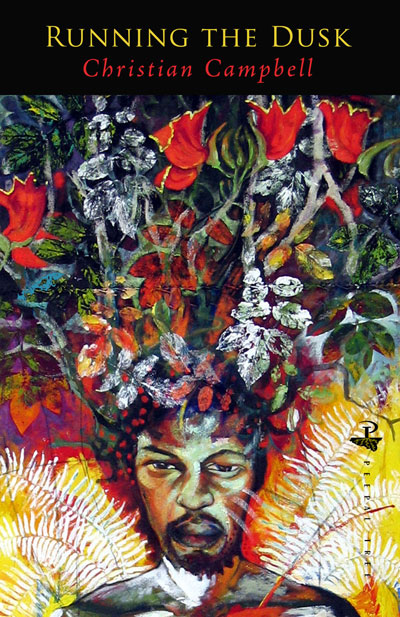
RUNNING THE DUSK by Christian Campbell, Peepal Tree Press, 2010.

A strong and impressive collection which shows up Campbell as a consummate poet, adept in different forms and willing to experiment and play with language. "Time to time I dare / myself to race the sun," the voice of the opening poem 'Bucking Up On Evening' remarks. The poems fly amid the blue hour of dusk.


SHE WHO SLEEPS WITH BONES by Tanya Shirley, Peepal Tree Press, 2009.

Tanya Shirley is an exciting poet whose poems, when she breathes them to life, startle, amuse and rally. Her voice can be heard on every page. The poems are  sharp, personal and sometimes harrowing, but always unforgettable. Compelling work which also conceals its craft.

***

10/14/11

Dream to change the world


FROM THE ORGANISERS:


The 30th West Indian Literature Conference, hosted by the University of the West Indies, St. Augustine, from 13 to 15 October, 2011, borrows its theme from a poem by the late Guyanese writer Martin Carter: “I Dream to Change the World: Literature and Social Transformation”.

As part of the conference programme, on Friday 14 October, from7.00 to 9.00 pm, the Bocas Lit Fest and Alice Yard will host an informal evening of readings and performances. Scholar Gemma Robinson, Carter’s editor and biographer, will speak about his relevance for today’s Caribbean writers and artists, followed by readings by Nalo Hopkinson, Vahni Capildeo, and Barbara Jenkins. 


READ MORE here.

10/9/11

In search of the sea

No Back Door by Mervyn Taylor, 2010, Shearsman Books, pp. 90 

Hew Locke, 'For those in peril on the sea'. Photo by Sam Millen.


"SEA have no back door,” warns the father-figure in the titular poem of Trinidadian Mervyn Taylor’s latest book No Back Door. The closing lines of the poem, with their complex comparative analysis of two lives and generations, are a haunting invocation of loss, memory and even bittersweet joy:

     Sea have no back door, he said,
     putting on his pyjamas and going
     to bed. All night I could feel
     the waves coming in.


Taylor’s book, which was awarded the 2011 Paterson Prize for Sustained Literary Achievement, is a continuation of many of the themes of the poet’s earlier work (which includes Gone Away and The Goat). It is a potent examination of contemporary Trinidad life, of migration and of the spaces in between and beyond. Death, loss, aging and illness confront characters of complexity who are given fine and gentle lines that hum like the low tide of the sea, always threatening to rise and eat away at an easily forgotten land.

The title poem, which is the penultimate poem of the book, is a good example of Taylor’s understated style and of the devastating emotional impact of his work. The father figure is subservient to forces in an around him: “In all his years on the island / my father never went to the sea.” Perhaps this self-imposed exile is not only a sign of father’s mind-set but also an expression of deeper fears. There is an inter-generational aspect to all of this: “He waved as we left for Point / Cumana, cleaned out the goat pens / and became the man his father / was, a necktie holding up his pants.” The play of that last image is highly suggestive: the necktie as a colonial/capitalist symbol is both rejected and embraced. In one sense its function is abandoned in favor of simpler things. In another sense the tie is embraced but made to suit the purposes and circumstances of the wearer.  


Thus, in a few lines Taylor has set so many elements in play, but we never feel overwhelmed. We feel the tension between the son, another generation perhaps, and the father without a single line of explicit drama. When the father puts on his pyjamas and goes, the line breaks before we continue to read that he has merely gone to bed. Sleep, death, departure and migration are all suggested. The son’s feelings are in contrast to the depiction of the father. But one may as well be a reflection of the other at different stages in life, perhaps. 


Elsewhere, similarly strong poems abound in this collection. 
Most startling is ‘On the La Basse’ which is a poem every Trinidadian will instantly recognize. 


Ostensibly the poem is about a bonfire at the Beetham landfill. Public servants oversee the burning of old receipt books. The supervisor–in the sense of that official post and in the sense of surveyor–witnesses a seldom seen scene: “And as the bonfire rose higher and higher / among the piles of the city’s garbage, I saw.” The line breaks. What did he/she see? “Men, women and children clamber with bags, / saving whatever they could, eggs and half-rotten / onions to keep or sell....”

The poem is a reflection of social inequalities and it aims to present these without didactic flourishes or sentiment.


“In the growing dark I read, by the glow of the / embers,” the supervisor says, “...the ashes settling, the whine of the truck, reversing.” The idea of reversal, the surreal scenes. They are enough for the poet to achieve his aims. 


Taylor–who teaches and divides his time between Brooklyn, New York and Trinidad–aims, perhaps, to chart journeys that are linked to the dilemma of the immigrant but not limited to that. In a sense, each piece is about a journey to death, the sea.


There are poems spanning the political and social aspects of colonisation (‘Colonized’ is a poem about Haiti which begins: “What do we owe them, for / taking back what was ours?”). There are pieces about ideas of ancestry and shared heritage (the titular figure in ‘Yankee Gal’ may have closer links to the Caribbean than she realises, especially given the warning encapsulated by the poem’s closing reference to Sparrow’s calypsos). Several poems recall illness, death and aging (‘Losing Weight’, ‘Joan’s Chair’, ‘Home is’, ‘At the Home’).


‘Felicity’ presents an account of crime in that town and laments its lost potential to be “a gift to the world”, as suggested by Derek Walcott in his Nobel Lecture of 1993. Of Taylor’s work, Walcott has said: “the sense of search, of the avoidance of flash, mutes his meters to an admirable degree, and the tone, which he found remarkably early, keeps him separate and unique.” This is a moving book which succeeds in charting a universal journey with skill and sensitivity.


* * *

No Back Door is published by Shearsman. For information on ordering visit: http://www.shearsman.com/

10/1/11

A new world

Dark and Unaccustomed Words by Vahni Capildeo, 2011, Egg Box Publishing, 120pp


OF POETRY, DH Lawrence once remarked, “The essential quality of poetry is that it makes a new effort of attention, and ‘discovers’ a new world within the known world.” What of the poetry of Trinidadian poet Vahni Capildeo, whose latest book is published next month? 


“This poetry is not for the faint-hearted,” is how Edward Baugh opens a review of Capildeo’s 
Undraining Sea. Of her first collection, No Traveller Returns, the critic Robert Bond, in a review which is not for the faint-hearted, says, “Capildeo’s book attempts a language without intention, to replicate the obscure expression of objectless inwardness, which is sensed to intend toward utopia.” Adding to the cauldron is David Miller who argues that Capildeo’s poetry “is utterly divorced from that unfortunately prevalent tendency to write poems where the words give way to an applauding audience at the next prestigious poetry awards.” Brian Catling characterizes Capildeo’s writing as “crafted silver turning on faultless glass.” Adam Piette has argued that Capildeo’s work involves a “many-voiced attention to the clamour of experience, of all that goes through the mind on difficult days.”


The voice of Capildeo’s poem ‘Oslo Readings’ – in 
Undraining Sea – adds what Baugh suggests is another prism by which to view things. The voice of that poem remarks that, “the words on the page no longer stand for meanings. It is an ink museum, a resistant sculpture park, a thicket of trees where the eye gets lost holding on to wrought iron fences. Each railing is barbed with a spear point. A vision of authority, the words stand out, separate, deadly, fine, archaic.”


Baugh, in his review at the 
Caribbean Review of Books, argues: “perhaps in our interaction with the poet’s words we should yield to the intransigence, and seek to cultivate a space beyond interpretation.” Baugh is correct to suggest this of Capildeo’s work, but the same could be equally true for all poetry, from Dante and Shakespeare right up to the so-called avant-garde.


But back to Lawrence. In an introduction to Harry Crosby’s 
Chariot of the Sun, he says, “poetry is a matter of words. And this is true, just as much as pictures are a matter of paint, and frescoes a matter of water and colour-wash.” Lawrence continues, “Poetry is a stringing together of words into a ripple and jingle and a run of colours. Poetry is an interplay of images. Poetry is the iridescent suggestion of an idea. Poetry is all these things, and still… another thing.”


That thing, Lawrence suggests, is the creation of an inner place through which we encounter the “strange and forever surging chaos” that is our world. 


I would adopt these ideas of Lawrence and suggest that the poetry of Vahni Capildeo not only breaks down conventional notions of seeing the world, but re-affirms ideas of the value and worth of individual experiences. This work attacks and affirms order and underlines what matters above all: the fate of the free self. It is a subversive ocean of diamonds, rubies and bones, raging against limiting forces. Capildeo uses a diverse set of forms to challenge hegemonic ideas of country, colony, gender and even of poetry. She challenges the very idea of definition, which is why her work is such a quandary to discuss. (The cover of her latest book, 
Dark and Unaccustomed Words, even features a series of question marks.)


‘Framboyan’, the first poem of 
Dark and Unaccustomed Words is a good example of the work. Outwardly, it is a child’s vision: at once dream and nightmare. But it is also a contemporary vision of a world facing forces consuming it. It is also a vision of the individual facing change and the prospect of death.

    That trees had evolved to eat other trees.
    That this happened at the end of a garden.
    That this was first noticed in a small tree’s wincing.
    That the larger tree was bending in, whipped by no wind,
    a flamboyant tree and not in flower, bunched to a beak.
    Dwarf and royal poinciana trees: almost one kind:
    at the end of a Trinidad childhood garden.

Trees, in a child’s playful vision, take over the garden, and then engage in war with other elements of nature. “Dwarf” and “royal” suggest stunted growth side by side with majesty: perfections found in the flawed. (“Royal poinciana” is also a reference to the tree of the same name, famous for its blood red blossoms, which gives the poem its title.) The royal trees and the mentioning of “a Trinidad childhood garden” raise questions of place: the relationship between the former colonies and the monarchy of the motherland. But also, the words import personal meanings for the poet, who is a Trinidadian living in Britain. For what is a “Trinidad childhood garden”? What is a “Trinidad childhood”? And a “childhood garden”? 


In this context there are ideas of migration (“Pitiless, we witness small uprootings; turn, / with each untreelike recommencing”); and also an inevitable fate that may be adulthood, a new home, death or all of the above (“we are next, who shall be due to fall under green shade”).


The idea of property (“But lock the doors (the well-made doors: investments, property)”; “It is good our doors are good”) is critiqued: material things cannot stop this process. The premises of the opening lines suddenly become conclusive with a subtle shift of the opening sentence which re-appears within the poem (“The thing is busy outside (that tree evolved to eat other trees)”). In this way, the evolution of the poem reflects the change that is its subject. Short sentences grow like the trees. But by the end, doors are useless in stopping the mysterious biological process (“And indeed it entered wading. For our doors were wood”).


The poem is an ordered glimpse of a chaos that cannot be pinned down. It is an evolving tree written on the product of trees. Trees—and what they may symbolize (growth, family, the environment &c)—thereafter serve as leitmotif in the book. 


The second poem (‘The Pale Beast / La Blanche Biche’) transmutes the childhood garden into tamed wood, “kept under lock and key” in a tense balance (“how shall I have recourse from this?”). What nature represents here is an even more powerful force on the individual, threatening danger and growth. The child, horrifically, becomes product of consumption; supernatural folklore ironically mirrors ordinary experience (“…That is my flesh within / the dish you banquet on”). There are at least three personas here: girl, beast and a projected other consummating the tension between the two.


The adult woman at the heart of ‘Driving Lesson: I’ seeks refuge in a park after power struggle dramatised by a driving lesson, which is itself metaphor for a deeper relationship: between lovers and self. The woman goes along with the driving instructor’s perspective passively, until a violent act changes things. The girl here has grown up and is able to assert herself against oppressive forces.


‘Tree With a Silver Lining’ is a lyrical examination of fleeting love which balances optimism with a kind of fatalism (“do not leave believing bereavement, who can stay?”) The poem is in awe of nature and places tender love in context of this larger force (“Come home, soon and quickly, love. The butterfly tree, / light on the fence, slender stems, make thoughts in me”).


Vahni Capildeo

Almond, Bearded’ (the title invites comparisons between growths of hair and other forms of organic growth) begins: “The tree could not believe how it became involved / with her… / Years it had taken growing to produce a crotch, / a midway knot of outward shadow.” The poem ends: “It too could love now, unrenewably…/ mortal and tree.”


The mangrove is the foundation of ‘Journal of Ordinary Days’, which is a kind of occasional poem describing a trip to the Caroni Bird Sanctuary. Again the awe and terror of nature: “what is this mangrove, salt-nourished, where sea floods inlets? / Can we breathe here?” The figure of the child reappears and there is an opening assertion of the individual’s propensity for change: “We are not born with an instinctive understanding of the mangrove”.


‘About’ is a poem dedicated to the late Pat Bishop. It is a mixture of occasional poem and prose poem (prosimetrum is a key quality of Capildeo’s style) featuring snakes, birds, unseen spiders. The final lines are: “For we ourselves are luminous. Except we do not give off light.” 


The book takes its title from a quotation of George Puttenham’s 
The Arte of Poesie (1589), hinting at an agenda to give voice to the marginalized within the debate of poetry. Publishers Egg Box describe the work as “the most lyrical and playful part of a three-part project exploring the boundaries of the human and the natural, and the oceanic or musical possibilities of poetic form.” This is a rewarding collection which grows, like the poet’s body of work.


* * *

Dark and Unaccustomed Words
 is published next month. For more information and to order online visit http://eggboxpublishing.com


READ poems from the latest book at Almost Island here.


LISTEN to Vahni reading her poetry here.  READ a sample from Undraining Sea hereCHECK some cool poetry links here (Inpress Books).

FILM REVIEW: Better Mus' Come, The Warrior

TT Film Festival 2011

There is a lot happening in Storm Saulter's Better Mus' Come. I found myself no longer grasping for plot, but rather searching for a space beyond the narrative and between the images. This is a bold kind of film with a lot of energy, stunning images and unforgettable moments.

The film is set in Kingston, Jamaica, in the late 1970s as gangs war. It would be easy to explain the gang warfare at the heart of events at the film by blaming politics, but there are other forces in operation as well: economic, social, cultural and even in terms of gender. The film makes no didactic points about governance but it places human relationships at its core. Some of it is heavy-handed and at times I yearned for a more simply edited story. But at the end, it was a moving treatment of a seldom depicted moment in Caribbean history. ***/4


I have never forgotten The Warrior since I first saw it in 2003. And in particular I will never forget the moment when we see the warrior at the centre of the movie suddenly uprooted from a desert landscape and placed in snowy mountain peaks. In this a premonition? The viewer is disoriented and startled by the beauty before her. But the film's director Asif Kapadia adds a sly touch: when the warrior--returned to his desert landscape--looks down he sees ice beneath his shoes. Is he cold inside? Has he been standing still through the seasons?

To describe the film's plot is to take away one of the pleasures of the movie. But this much can be said: there are elements of the classic Hollywood Western and of the action adventure. Watching the film for a second time, I was struck by how perfect it is: the actors have faces that were meant to be filmed. There are amazing moments of dialogue--particularly one involving a blind devotee--and perhaps one of the most unforgettable endings of any film in the last decade. Watching again, I had a re-enforced feeling that I was watching greatness of a special kind unfold. The film is not ostentatious and works within a simple confined framework. But how well it works. ****/4

9/29/11

Race to studiofilmclub

TT Film Festival 2011


FROM THE ORGANISERS:


studiofilmclub
Building 7
Fernandes Industrial Centre
Eastern Main Road
Laventille
Port of Spain


Thursday Sept 29&30th doors open 7:00pm feature commences 7:30pm(curfew/state of emergency hours..sigh.)
 ALL WELCOME... & FREE!


STUDIOFILMCLUB are pleased once again to be collaborating with the Trinidad & Tobago Film Festival in 2011 - our fifth year together.
This year we are extremely excited to be screening two films by 
the London based director ASIF KAPADIA. We will be screening his critically aclaimed first feature THE WARRIOR and his most recent sensation SENNA. Two very different types of film..
A very special thanks to Asif and his producers for so kindly allowing SFC to present his films to a Trinidadian audience for the very first time!


Thursday Sept 29th 7:30 screen time

SENNA (Asif Kapadia/UK/2010/106')


PERHAPS YOU HAVE NO INTEREST in Formula One racing. Perhaps you’re resistant to documentaries in general. Neither of these should keep you from seeing Asif Kapadia’s Senna (2010), a marvel of a movie that has at its center the very thing one longs for and seldom finds on screen today: a brilliant, charismatic, romantic hero. Three times a world champion in a ten-year career, the Brazilian racing car driver Ayrton Senna is considered by aficionados of the sport to have been the greatest driver of his generation—and perhaps of all time. He was also wildly handsome, generous, honest, intelligent, and intensely spiritual. He loved racing, his family, and his country. He donated millions to educating poor Brazilian children. He faced down the Formula One hierarchy that looked on him as an upstart from a third world country—not that that prevented Formula One from capitalizing on his audience appeal—and he challenged himself in every race, not only to win but to achieve the perfection of a form. In other words, he was an artist and a superhero, who tragically is unavailable for a sequel to the most exhilarating and heartbreaking action movie of the summer. Senna was killed in 1994 in a race about which he had grave misgivings, but from which he could not bring himself to walk away.


Friday Sept 30th 7:30 screen time


THE WARRIOR (Asif Kapadia/UK/2005/86')
Narrative elegance and rapturous imagery highlight The Warrior, which won two BAFTA awards: Best British Film & Best Debut film. The first feature by Asif Kapadia and co-writer Tim Miller let their story of a repentant warrior unfold slowly. Set during an unspecified ancient time in the seldom-captured picturesque locales of India's northwestern desertland and the western Himalayas, Asif Kapadia's feature debut is a minimalist but strikingly beautiful tale of renounced violence told with uncommon precision and depth. The title warrior, Lafcadia (Irfan Khan), is a longtime indentured servant and executioner whose livelihood consists of ravaging small villages — and their women — with his menacing gang of brutes. During a routine pillaging, he experiences a flash of clarity and resolves to never again pick up a sword. But his vicious warlord master immediately retaliates by calling for the head of Lafcadia and the death of his disloyal servant's only son. Instead of becoming a typical revenge-driven killfest like many of the westerns that were clear inspirations for this film, it develops into a rich journey of repentance, redemption and acceptance of fate.

9/26/11

A new space of sound and fury

TT Film Festival 2011: New Media show
From Atlantic Transformerz by Dutch artist Charl Landvreugd

AT A CORNER of the basement of the brand new Medulla Gallery on Fitt Street, Woodbrook, is a large black LCD screen. The rectangular screen plays a looped video showing several faces, each adorned with all sorts of different objects and textures. The faces look at you with an intensity that is almost disconcerting: the eyes, lips and features jump out and literally shimmer as slow movements capture changes in light. This is Atlantic Transformerz a work by Dutch artist Charl Landvreugd, one of several artists gathered for "New Media" one of the side-events of the Trinidad and Tobago Film Festival.

"Atlantic Transformerz explores the multiplicity of hues of the colour black, and makes an issue out of distinguishing black diversity," notes the liner notes to the show, curated by ARC Magazine's Holly Bynoe and Nadia Huggins. "Inspired by the African diaspora in Amsterdam, Landvreugd unites the four continents around the Atlanic Ocean." But there is something that happens to work when it is placed in a room where it interacts with its audience. Atlantic Transformerz managed to raise issues about blackness, yes, but also provide a glimpse at deeper mysteries: its half costumed subjects revealed more through their covered skin. They sought answers to the viewers questions.

Basement of the Medulla Gallery, Fitt Street, Woodbrook

This is the kind of exciting thing that happened at the New Media show which completed its run over the weekend. The show saw several video pieces share the same audio track, to disorienting yet unifying effect. What helped too was the fact that the entire ground floor was devoted to the stunning photographs of Trinidadian artist Abigail Hadeed. Viewers then descended a small spiral staircase hidden near the back and became submerged in the video pieces, which included 'Amphibian Mode' by Puerto Rican artist Nayda Collazo-Llorens, a work which united text and noise with nonlinear narrative and "post-aphabetic" communication.

Trinidad artist La Vaughn Belle's 'Somebody's Been Sitting in My Chair' worked well in the space. The video work showed the artist re-enacting the scenes of Goldilocks and the Three Bears, wandering an 18th century colonial great house, dressed in casual wear. The idea of the house echoed the space, which is itself a kind of house with wandering viewers encountering work and asking: who owns the work? For whom are these pieces intended? These complex questions mirror the complex issues in the piece which throws up ideas of ownership, identity, 'beauty', colonialism, race and class struggle. Is the artist/walker an intruder or the real owner reclaiming the space? Does she reclaim the space or is the space reclaiming her? In other words: what power does she really have? Who is she?

Installation view of Atlantic Transformerz by Landvreugd


Similar questions are raised by Jason Keeling's 'Jesus Speaks of Me as I Am': a series of clips of men walking. Who are they? Where are they? When are they walking? Costumes change, reflecting apparently different periods, walkers move from city to country landscapes and back. If the artist in 'Somebody's Been Sitting in My Chair' reclaims a space, then what are these men doing? Are they running away for a space? Or is the action of movement a space itself? Something about the piece reminded me of the gangs that have sprung up all over the Caribbean with their own vernaculars and iconography. Who really are these men? Gangsters or something else? Who decides?

This, then, is a show of affirmation curated with some ingenuity by Bynoe and Huggins. The assemblage, like Lorraine O'Grady's video-work 'Landscape (Western Hemisphere)' is a hybrid of perspectives all asking the question who are we in this brave new world.

SEE more here.

Pieces of history

Hew Locke. West Indies Sugar Corporation, 2009. Acrylic paint on paper. 12 x 8 3/5 in. (30,7 x 22 cm.).


"Curators Christopher Cozier and Tatiana Flores presented a model for viewing or representing history as an emerging and fragmented partiality. A partiality, however, that does not preclude, but rather enriches one's ability to contemplate the circumstances it seeks to describe..." READ MORE here.